In 2017 I told a Toastmasters contest that hardworking women still rarely reach the top.
In March 2017, around International Women's Day, I entered a Toastmasters International speech contest with a talk about women leaders. My point was simple. The women around me worked harder than almost anyone I knew, and very few of them ever made it to the top.
The business case
Who gets to lead is a business question. If you run a company, you decide who gets promoted, who gets mentored and who gets support when life gets hard. The speech ended with a challenge to help empower the next generation of women leaders. For a founder, that challenge is about hiring, managing and building a team.
The talk is from 2017, so I've dated the numbers below.
Under 5 percent at the top
I opened with the gap at the very top. I said only a small share of C-level roles, the CEOs, CFOs and CIOs, were held by women. Then I narrowed it to chief executives of the biggest companies, and put the share at less than five percent.
The numbers back that up. The 2016 Fortune 500 list, the one in place when I gave the speech, had 21 women CEOs. That's 4.2 percent of the 500 largest US companies.
Watching my mom work
Then I made it personal. I watched my mom, a single mother, work three jobs just to survive. She was a teacher during the day, a store clerk in the evenings, and she worked on weekends too. Despite all that work, we still had to choose between buying books and putting food on the table.
The pay gap
I also said that, on average, women still earn less than men. In 2017 UN Women put the worldwide figure at 77 cents for every dollar men earn.
Ada Lovelace saw further
The middle of the speech was three women I called world-class leaders. Each one had a profound influence on my life.
The first was Ada Lovelace. In 1843 she published notes on Charles Babbage's Analytical Engine. The Computer History Museum calls those notes visionary from a modern perspective. She saw that a machine could work with symbols as well as numbers. She's often called the first programmer. In the speech I said it took about a hundred years for the world to catch up with her. Her mother had her study mathematics, an unusual education for a woman then.
Jump to
- 0:00 Women leaders by the numbers
- 1:26 My mother's story
- 2:11 The pay gap
- 2:43 Ada Lovelace
- 3:47 Shirley Chisholm
- 4:47 Sheryl Sandberg
- 6:43 My challenge to you
The full speech runs about seven minutes on my channel: Women Leaders, Toastmaster International Contest, on YouTube.
Shirley Chisholm ran anyway
The second was Shirley Chisholm. In 1972 she sought the Democratic nomination for president. That made her the first Black woman to seek a major party's presidential nomination, as the National Women's History Museum notes. She was already the first African American woman in Congress, elected in 1968.
She ran while Black Americans were still fighting for civil rights. What stuck with me was something she said about that campaign. She found she faced more discrimination as a woman than for being Black. PBS has her words: "I have certainly met much more discrimination in terms of being a woman than being black, in the field of politics."
Sheryl Sandberg and support
The third was Sheryl Sandberg. In 2017 she was Facebook's chief operating officer and a household name in tech. She was also a big advocate for women in the workplace, and I told the room to read her book, Lean In.
She had also become a single mom. Her husband, Dave Goldberg, died in 2015. On Mother's Day 2016 she wrote a public post about single mothers. She wrote that it takes a community to raise children, and that single mothers deserve far more support than they get. I closed that part of my speech with the same idea. We owe it to them to do better.
My challenge to you
I ended with one message. I challenged everyone in the room to think about how they could empower women and help raise the next generation of leaders.
For founders, that's practical. Look at who's doing the work on your team and who's getting the title. Notice who's carrying a second job at home. Mentor, promote and back the people who earn it.
If you're building a company and want to talk through how you hire and lead, join me live on Friday. If you're just starting out, I also wrote about how non-US entrepreneurs can start.
About Dwain
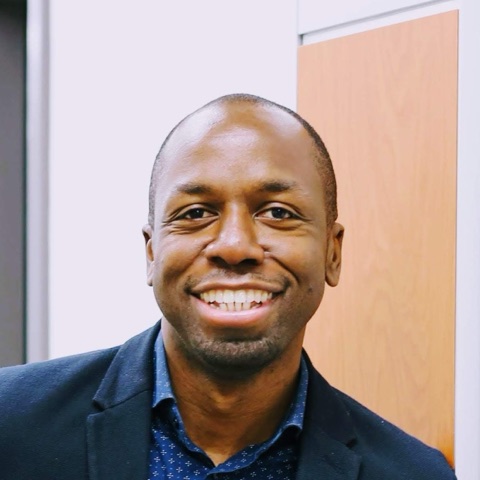
I'm Dwain Browne, Founder of LeadScore AI and SnapSuite. I'm a Toronto-based software architect with 25+ years across software, sales, operations and entrepreneurship. SnapSuite helps contractors and trades teams get paid faster, and LeadScore AI shows you which leads deserve your next call. I also run Vibe Code to Profit, a community helping people build software with AI.